Lavender Makes Me Happy
by Maisy Magill
I have always had a deep love of lavender. I used to dream of opening a bed and breakfast called Lavender Hills where the B&B was a violet-colored Victorian surrounded by fields of lavender. While I never opened my B&B, that beautiful dream transformed itself and wound up on the page, with a few variations, in my upcoming cozy fantasy novel, Must Love Lavender and Little Lies.
Lavender is the best botanical. I will fight anyone who says differently. You see, lavender has been making people happy for a very long time. The word lavender comes from the Latin lavare, which means “to wash,” and since ancient times, people have been washing themselves, their linens, and their worried hearts with this remarkable herb. Centuries of folk healers knew something we’re only now confirming with clinical studies: lavender is genuinely, measurably good for us.
How can it help you? Well, here are ten of my favorite ways lavender can bring a little more ease and beauty into your everyday life.

10 Ways Lavender Can Make You Happy
1. Diffuse it when you’re anxious.
This one has serious research behind it. Studies have found that inhaled lavender acts on the limbic system, the part of your brain that governs emotion and memory, specifically the amygdala and hippocampus. That’s not woo-woo; that’s neuroscience. Folk herbalists have been recommending lavender for anxiety and nervous tension for centuries, and modern aromatherapy backs them up. Add a few drops to your diffuser on a stressful afternoon and just breathe.
2. Put a sachet in your pillowcase.
Lavender as a sleep aid is one of the oldest folk remedies around. People have been tucking dried lavender into pillows and linens since medieval Europe, partly for the fragrance, partly because it kept insects away, and partly because it worked. A 2015 study found that people who used lavender aromatherapy felt more refreshed upon waking. A lavender sachet costs almost nothing to make and it is an extraordinarily cozy thing to do for yourself.
3. Make a simple lavender tea.
Dried culinary lavender steeped in hot water makes a gentle, slightly floral tea that folk herbalists have long recommended for headaches, digestive upset, and frazzled nerves. A small 2020 study found that older adults who drank lavender tea twice a day for two weeks experienced lower levels of anxiety and depression. Pair it with honey. Sit by a window. Call it medicine, because it sort of is.
4. Rub a little diluted oil into your temples for headaches.
In traditional herbal medicine, lavender oil was applied topically for headaches long before we had ibuprofen. One study on migraines shows that people who inhaled lavender oil at the start of an attack reported significantly more relief than those who didn’t. If you try this at home, always dilute essential oil in a carrier oil like coconut or jojoba.
5. Add it to a bath.
A warm bath with a handful of dried lavender (or a few drops of essential oil stirred into the water with a carrier oil) is one of the simplest, loveliest folk remedies that exists. The warmth helps the volatile oils release, you breathe them in while you soak, and the whole thing is deeply soothing. This is the original lavender spa.
6. Keep a sprig on your desk.
This one is so simple it feels almost too easy, but simply smelling a fresh or dried lavender flower provides real benefit. Just breathing in the fragrance of a lavender blossom is enough to start feeling the calming effects. Keep a little vase of dried sprigs on your desk. Reach for it when a meeting runs long. It costs two dollars and it works.
7. Use it in your skincare routine.
Lavender has well-documented antimicrobial and anti-inflammatory properties, and folk healers applied lavender preparations to minor wounds, insect stings, acne, and burns for generations. Modern research confirms it can help with acne and minor skin irritation. A drop of diluted lavender essential oil in your unscented moisturizer is a small, old-fashioned luxury that has some actual science behind it.
8. Make a linen spray.
Lavender was the great linen herb of European folk tradition. Bundles of it tucked into wardrobes and chests kept fabric fresh and moths away. You can recreate this with a simple linen spray: a small spray bottle, water, a little witch hazel, and several drops of lavender essential oil. Spritz your sheets, your curtains, your reading chair. Your whole home will feel like it belongs in a Moonshine Hollow meadow.
9. Grow your own
There is something genuinely grounding about keeping a living lavender plant. Even if you are not a gardener, lavender is forgiving. And the act of tending something, of snipping a few stems and breathing in that warm, green scent, is its own kind of therapy.
10. Bake with it.
Culinary lavender is one of the great underused kitchen herbs. It pairs beautifully with honey, lemon, shortbread, cream, and berries. There is something deeply satisfying about eating something you also associate with calm and beauty. Paired with a nice tea, it’s the perfect calming moment.
Lavender Honey Shortbread Cookies
It would be easy to imagine Juniper baking these cookies the stone oven in her cottage, mixing her kitchen ingredients with Granik’s lavender crop. These cookies are little sweet, a little herbal, golden around the edges, and deeply comforting. They come together in one bowl, require no chilling, and make your kitchen smell like divine. Pair with your favorite tea for a relaxing Saturday afternoon kind of treat.
Makes about 24 small cookies
Ingredients
1 cup (2 sticks / 225g) unsalted butter, softened
½ cup powdered sugar
2 tablespoons honey
1½ teaspoons dried culinary lavender, finely chopped
1 teaspoon vanilla extract
¼ teaspoon fine salt
2 cups all-purpose flour
Instructions
Preheat your oven to 325°F (165°C) and line two baking sheets with parchment paper.
In a large bowl, beat the softened butter until it’s smooth and creamy. Add the powdered sugar, honey, lavender, vanilla, and salt. Mix until everything is fluffy and well combined (about two minutes.)
Add the flour and mix until a soft dough comes together. With the honey in the dough, it will be a little softer and tackier than classic shortbread.
Roll the dough into small balls (about 1 tablespoon each) and place them on your prepared baking sheets. Press each one gently with your palm or the bottom of a glass to flatten to about ¼ inch thick.
Bake for 10–12 minutes, watching closely toward the end. Honey browns faster than sugar, so pull them when the edges are just barely golden. They will look underdone in the center. They are not. Let them cool on the pan for 5 minutes before moving.
Optional but lovely: while still slightly warm, brush lightly with a little extra honey and sprinkle with dried lavender.
Make sure you’re using culinary-grade dried lavender, not ornamental or treated lavender from a garden center. And start with 1½ teaspoons. Lavender is assertive, and you want floral, not soapy. You can always add more next time.
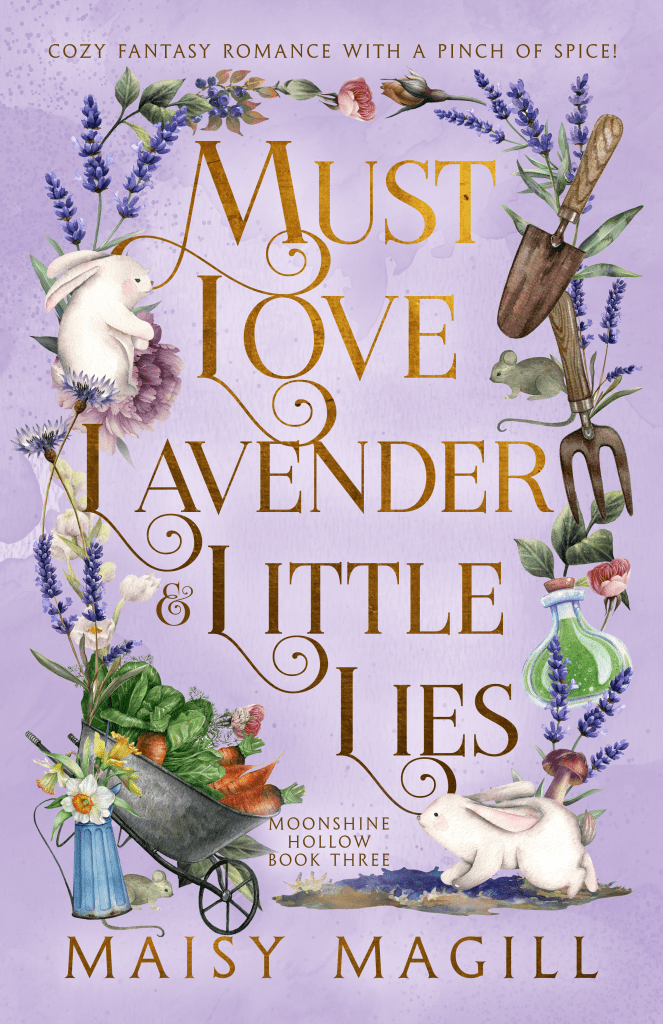
Writing Must Love Lavender and Little Lies, with all of its farmcore and cottagecore vibes was a delight. I finally got my lavender farm—even if it belongs to Granik. But I also got to spend time researching, thinking about, and just enjoying ruminating on this special botanical. Whether you’re diffusing it, drinking it as tea, bathing in it, or pressing a warm shortbread cookie into someone’s hands, you’re participating in something ancient and kind.
And I think that’s worth celebrating.
Must Love Lavender and Little Lies releases April 14th. If you love cozy fantasy, friends-to-lovers, and small-town magic, this novel is for you.
Maisy Magill writes the Moonshine Hollow cozy fantasy romance series. You can find her books on Amazon, Audible, and in her Etsy shop. She also hosts a Patreon full of recipes, worldbuilding extras, and behind-the-scenes content from the hollow.
Find out more at MaisyMagill.com and patreon.com/maisymagill
 Funk-N-Fiction